Conservation · Iron corrosion concretion with various materials
Maritime Concretion
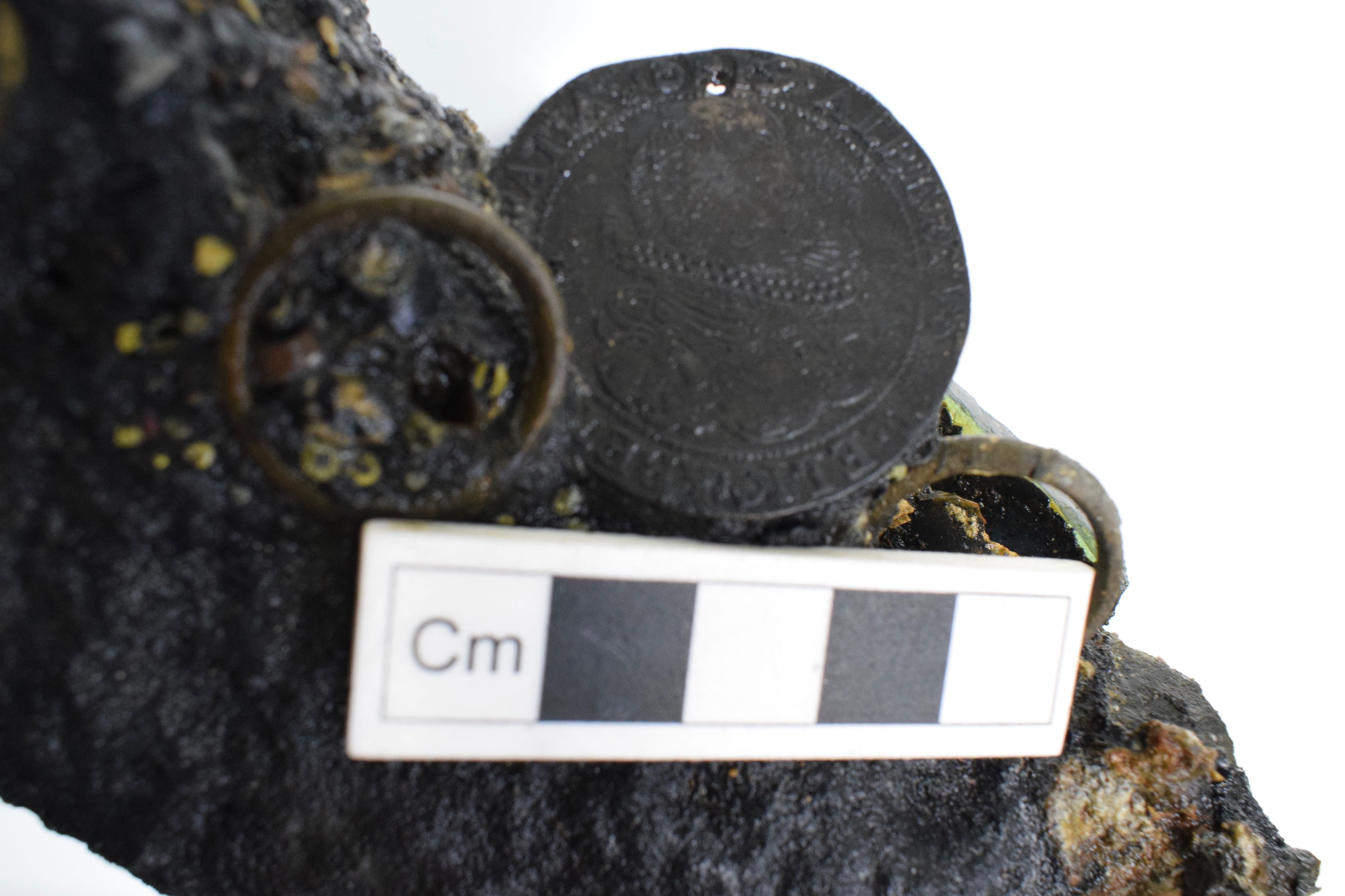
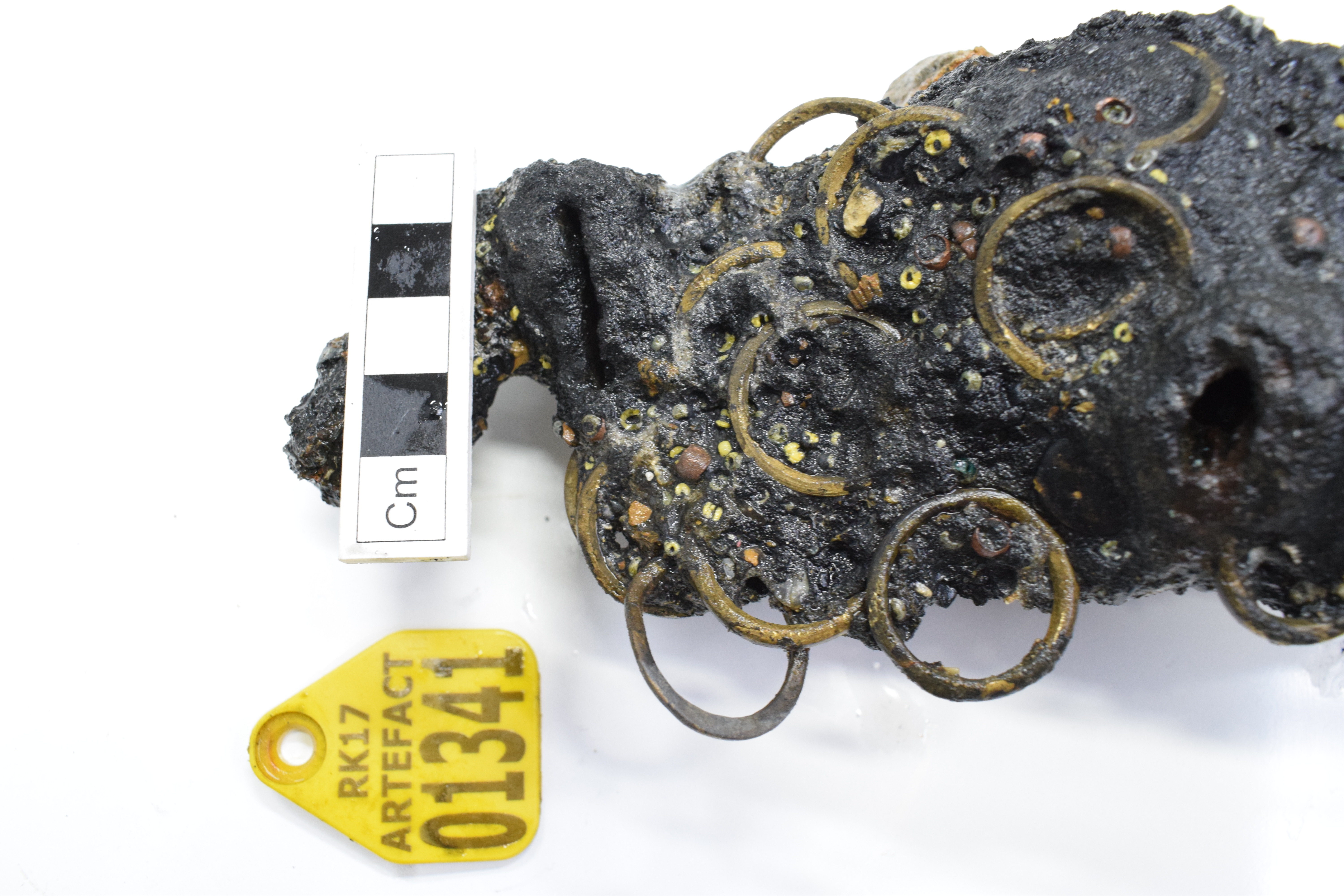
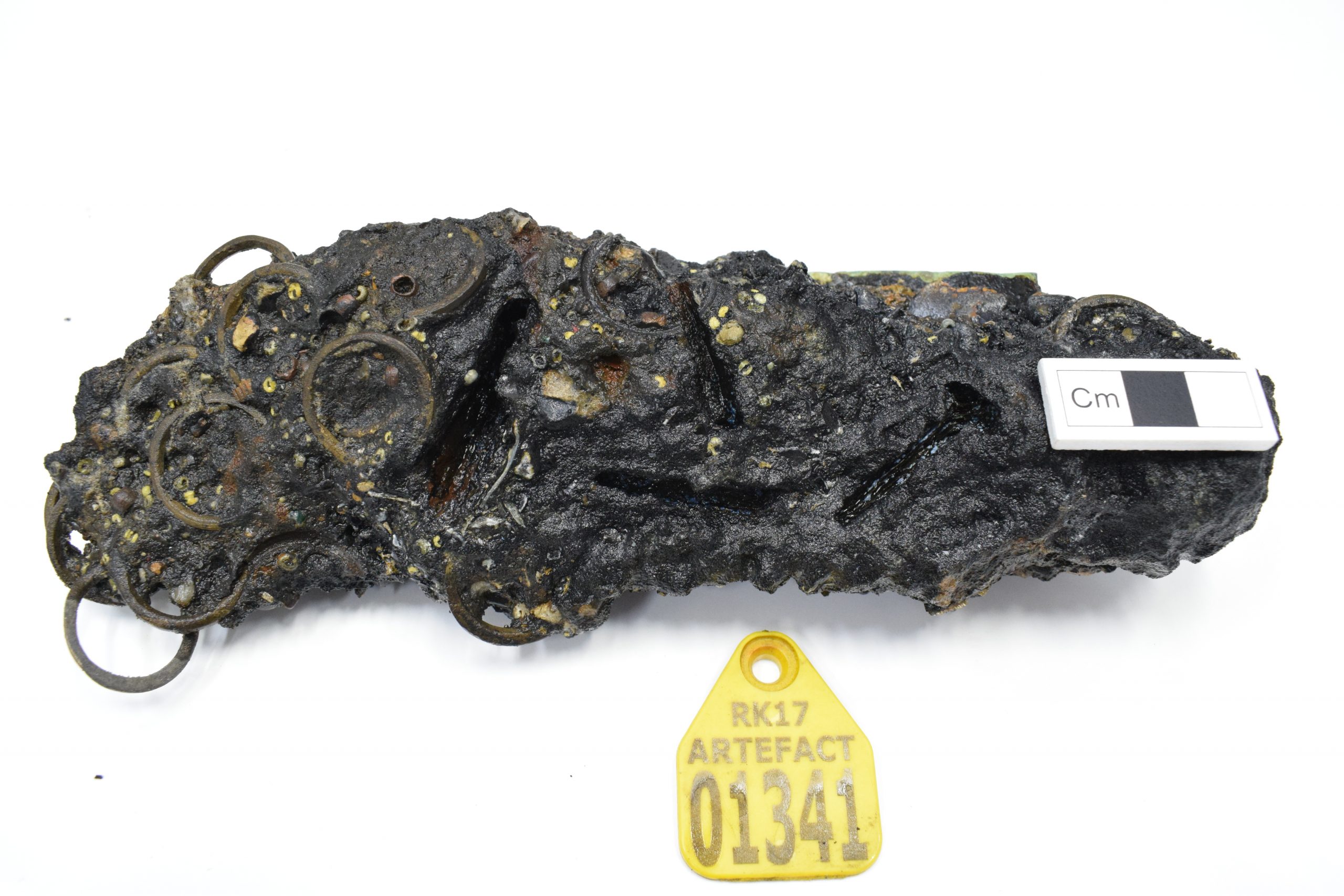
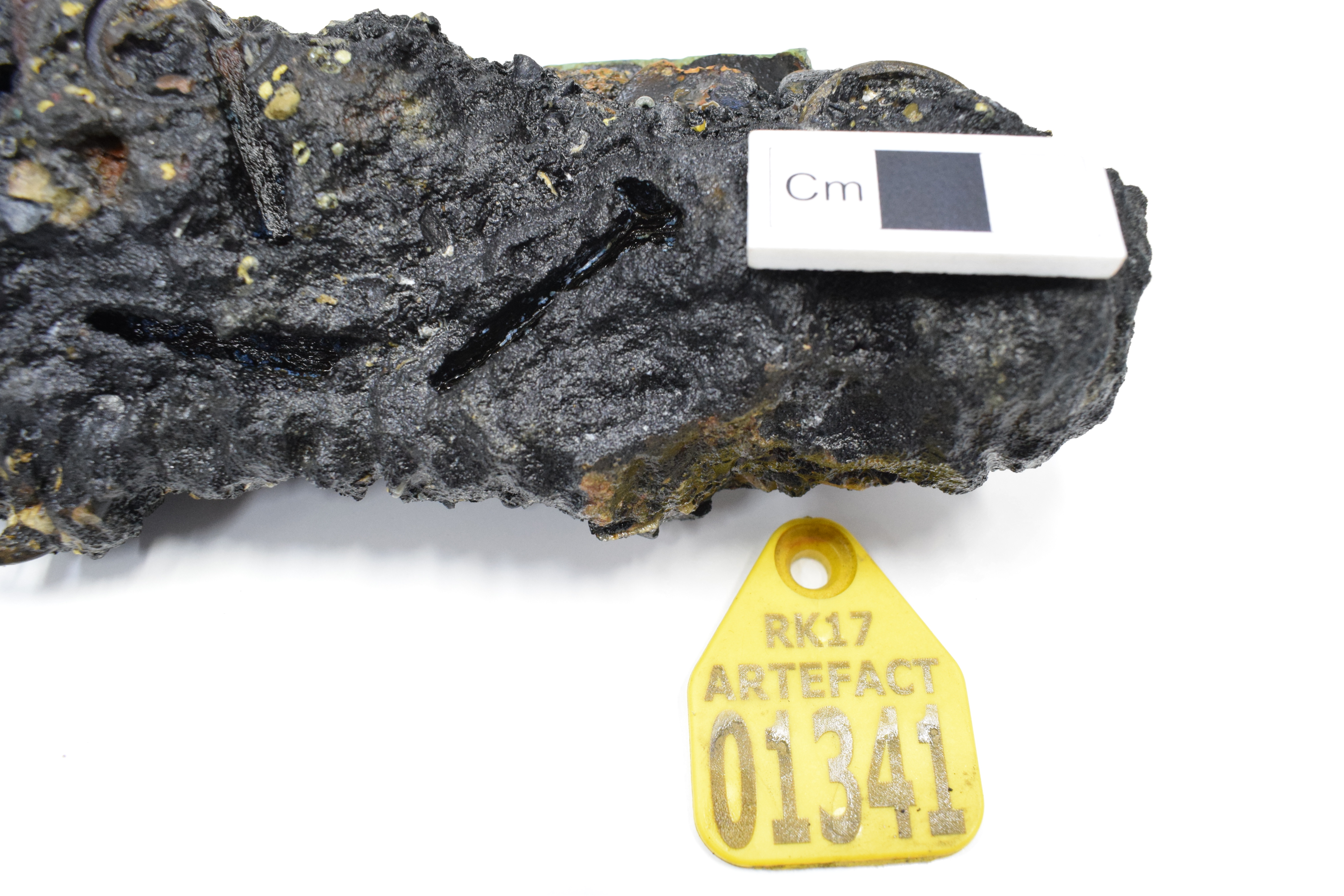
Conservation of a complex maritime concretion containing multiple embedded objects, treated using x-radiography, mechanical and chemical methods.
-
Client
Dutch government
-
Period
18th century
-
Origin
Fort Cumberland, Portsmouth
-
Duration
3 months
Challenge
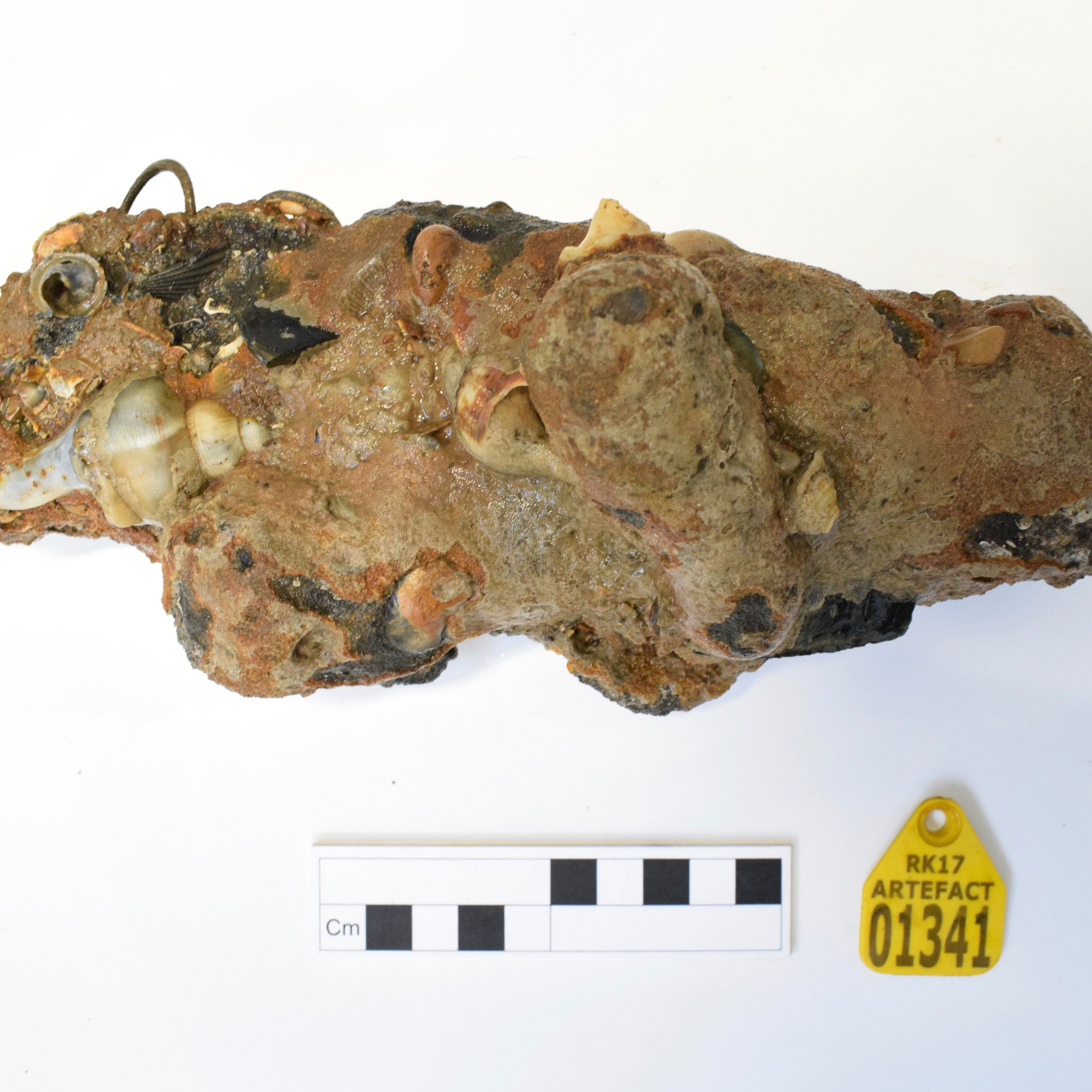
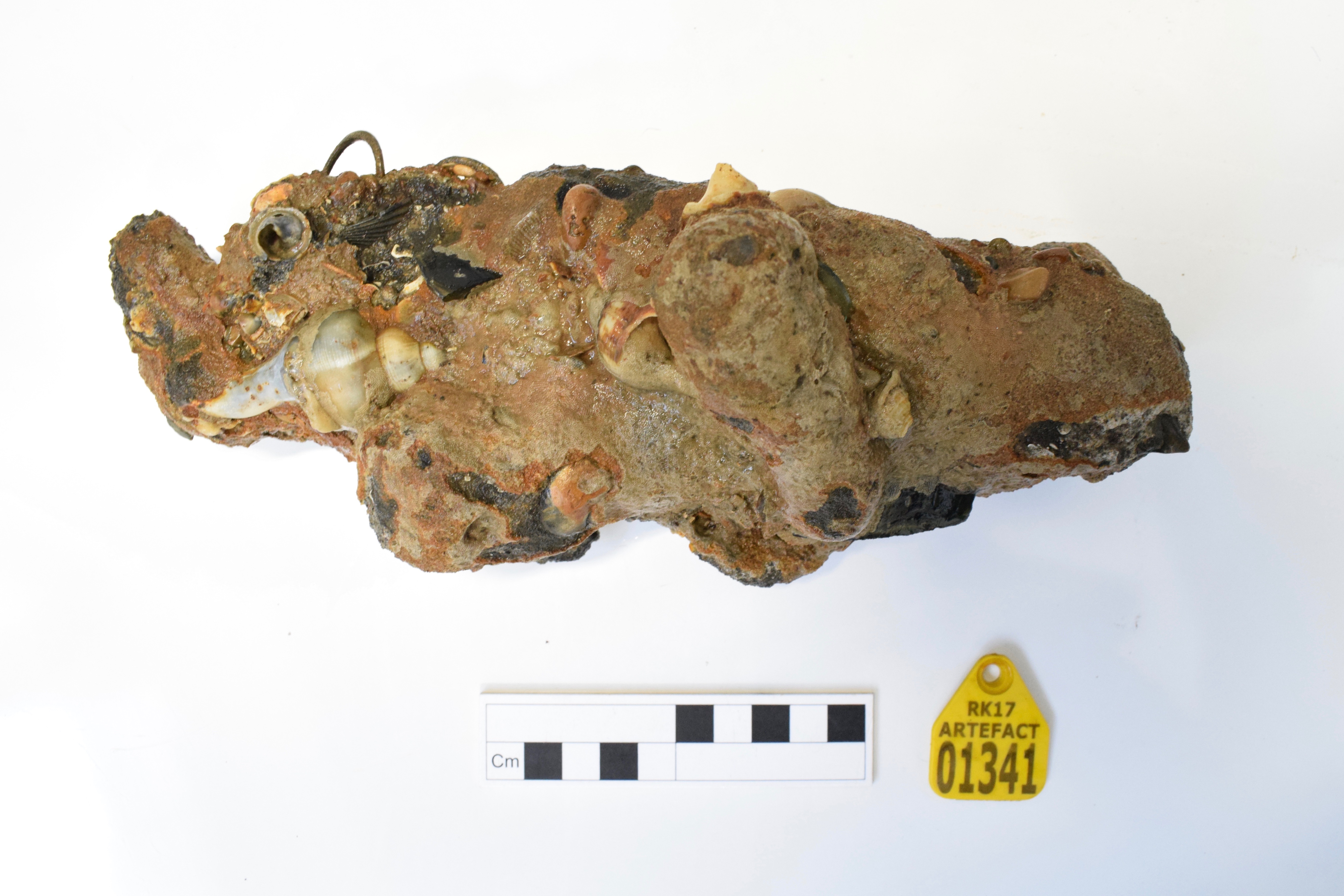
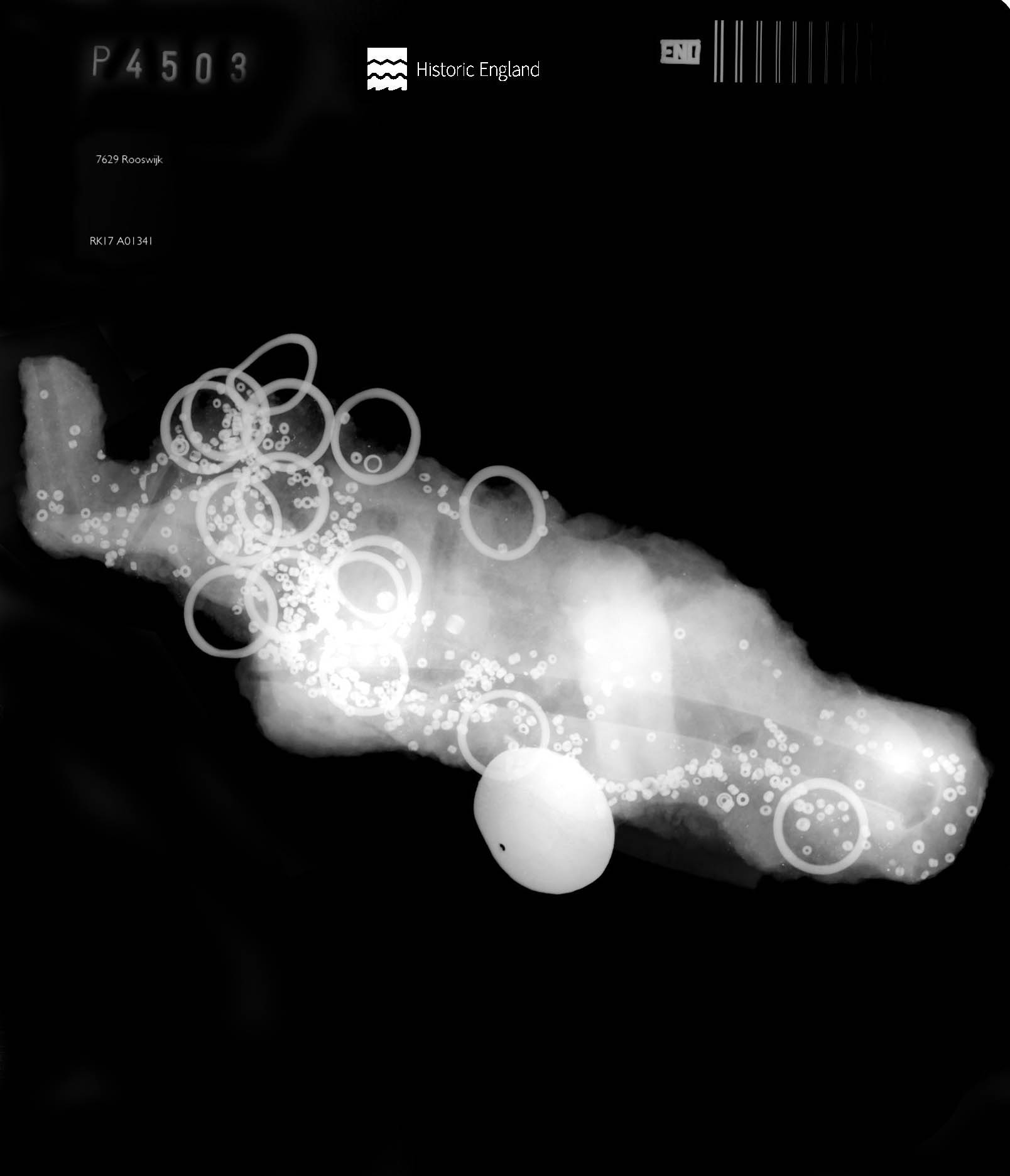
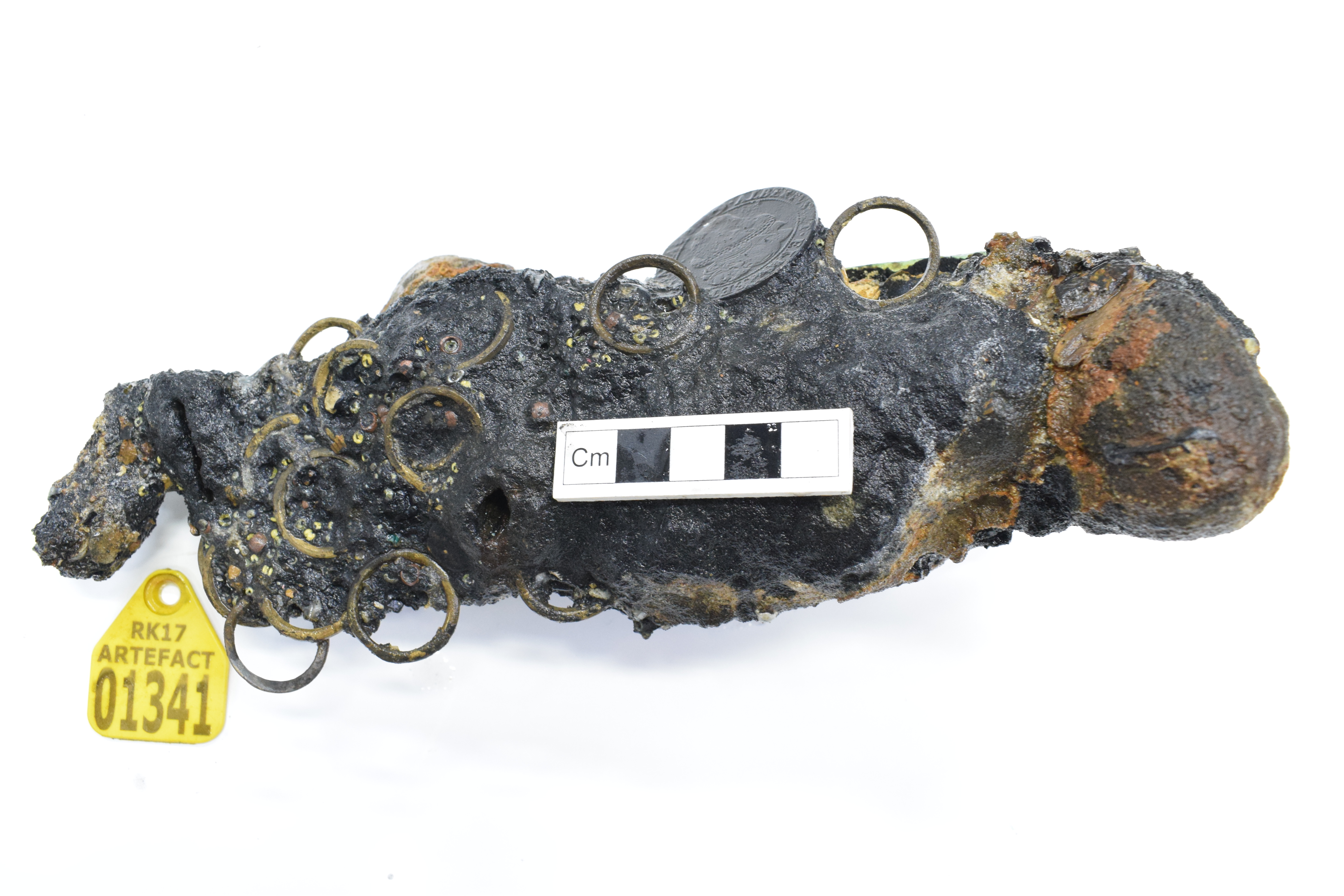
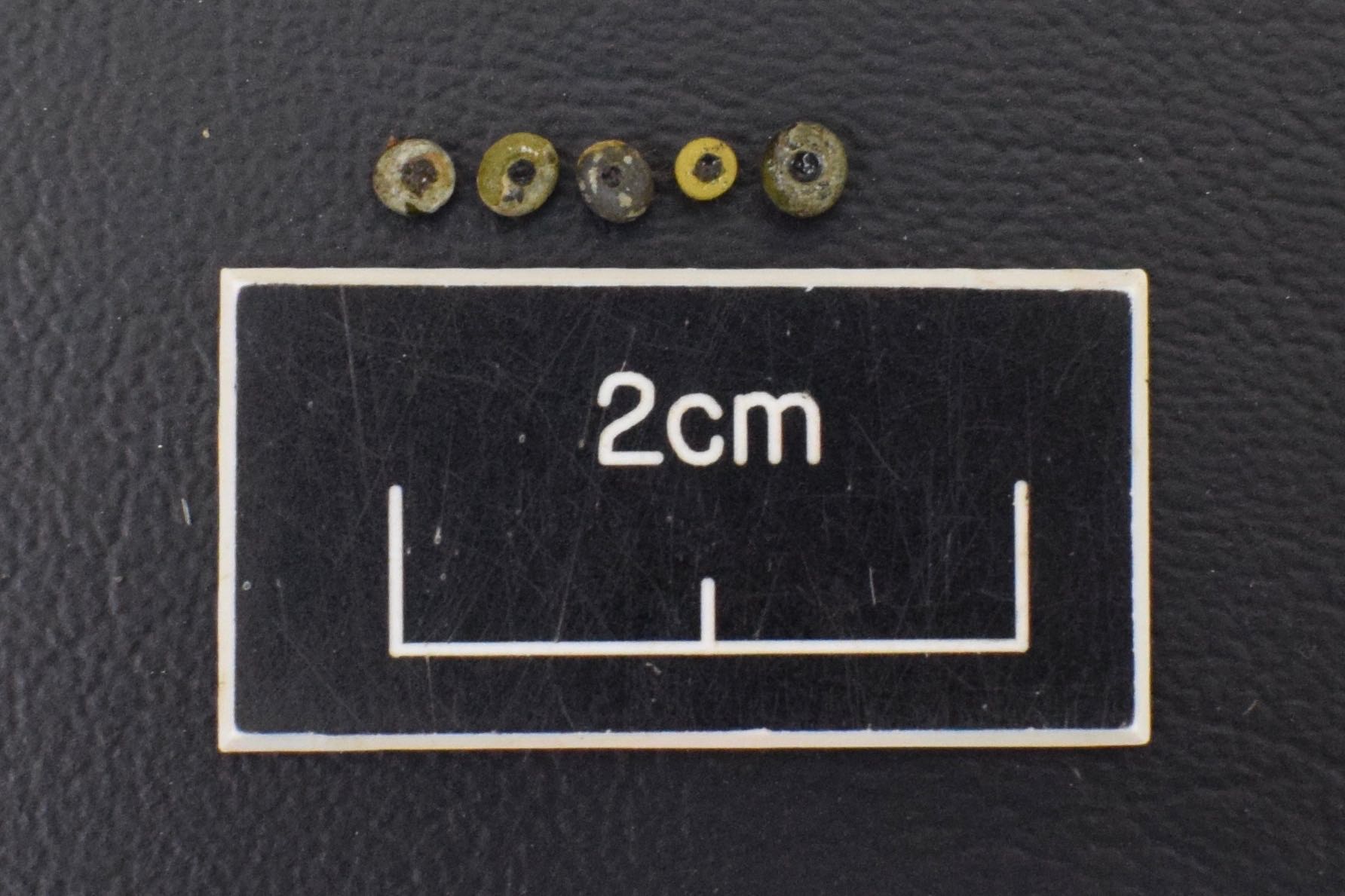
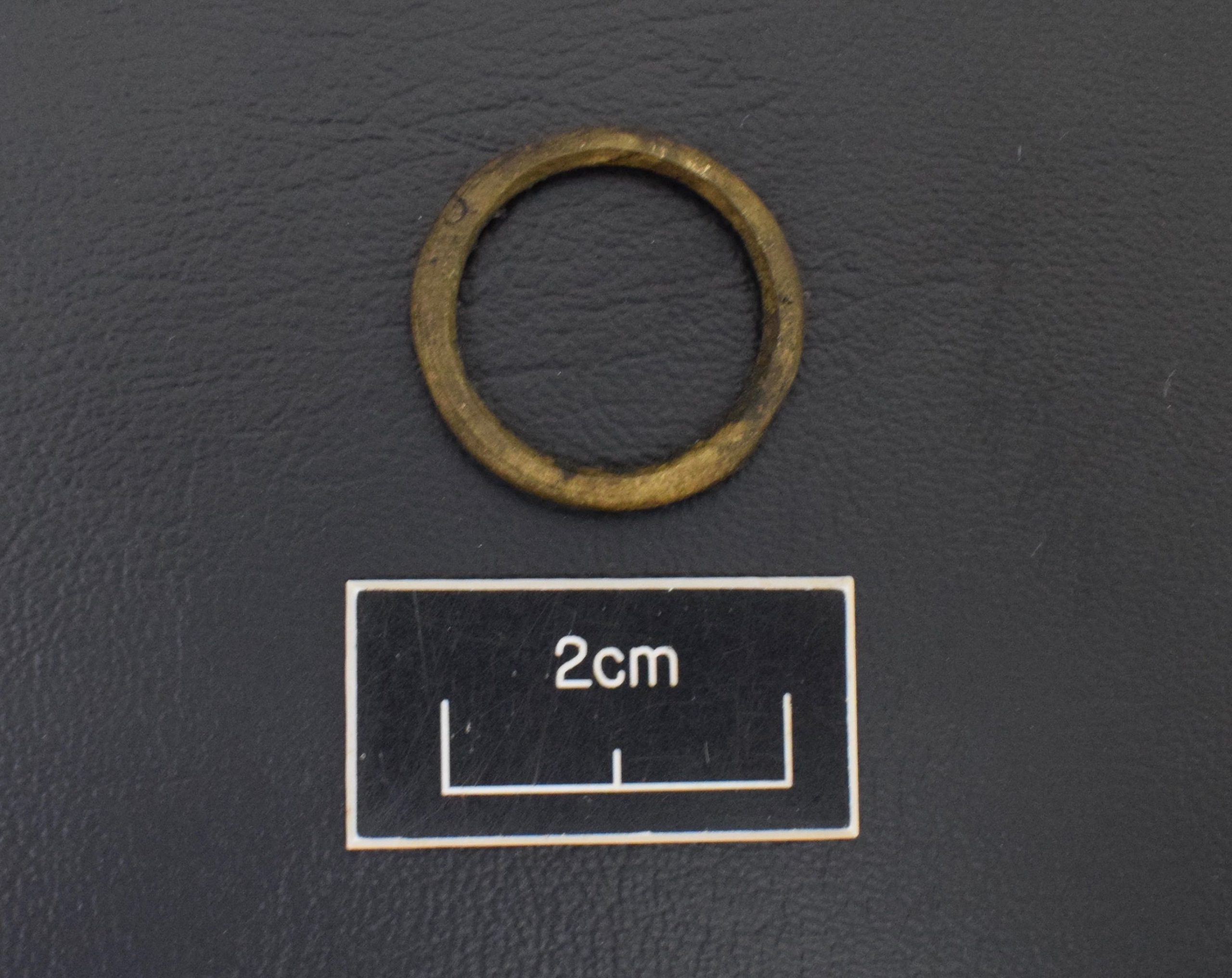
The maritime concretion contained multiple valuable objects (glass beads, a silver coin, brass rings) that were completely encased in iron corrosion. Exposing these delicate objects without damage required extreme caution. The different materials required different treatment approaches.
Approach
A combination of advanced investigative techniques and treatment methods was applied. X-radiography was used to determine the location and condition of embedded objects before mechanical removal began. Experimental chemical treatments with EDTA were tested as an alternative to purely mechanical work on the most delicate areas.
Outcome
All embedded objects were successfully exposed and identified. The glass beads, silver coin, and brass rings were conserved and are now available for research and exhibition. The experimental EDTA approach proved effective for the most delicate areas and provided valuable insights for future maritime conservation projects.
Techniques
- X-radiography
- Mechanical corrosion removal with air-scribe
- Experimental EDTA treatment
- Chemical extraction
- Selective cleaning per material type
- Maritime conservation techniques
- Detailed documentation
Materials
- Hydraulic air-scribe
- EDTA
- Conservation chemicals
- Protective coatings
- Consolidation materials
Interested in conservation services?
Each project receives individual attention, with a treatment plan tailored to the specific needs of your object.